



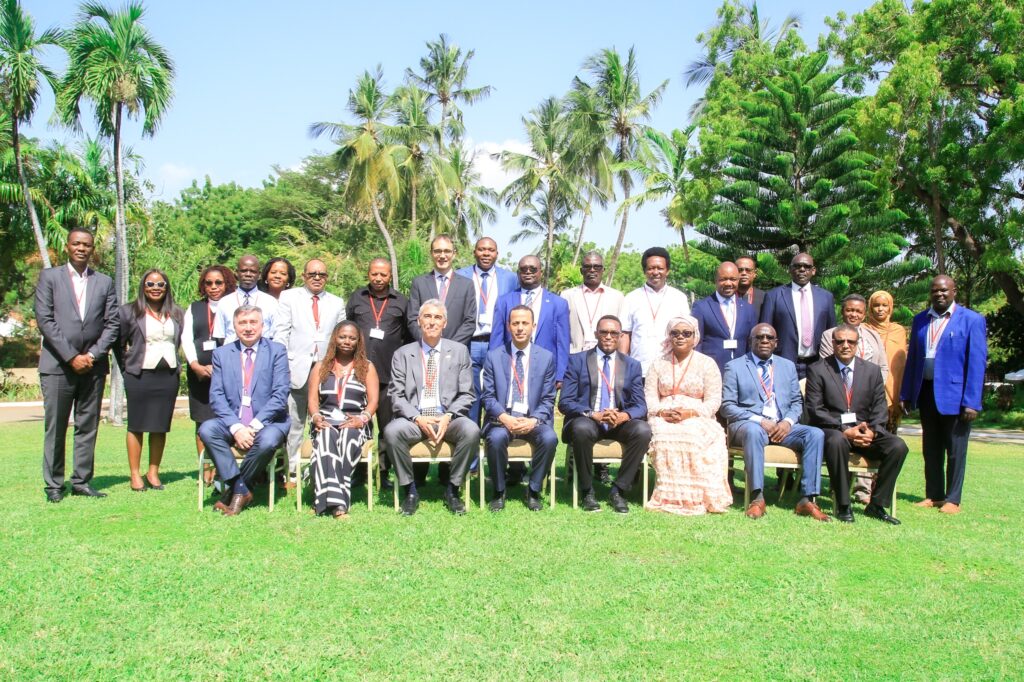
The Support to Air Transport Sector Development Programme (SATSD) has received a two-year extension to end in December 2028. The recommendation was made during the Programme Steering Committee (PSC) Meeting, chaired by COMESA Assistant Secretary General for Programmes Amb. Dr. Mohamed Kadah, held in Mombasa, Kenya, from 19–20 February 2026.
The meeting which provided strategic direction for the next phase of implementation had participation from key partners from the African Union, Regional Economic Communities (RECs), the European Union and key aviation institutions.
Speaking during the opening, Amb. Kadah said air transport plays a key role in accelerating trade, tourism, investment, employment and in strengthening connectivity at national, regional and international levels.
However, despite its importance, the aviation sector across many African States continues to face persistent challenges, including inadequate infrastructure and equipment, fragmented regulatory frameworks, limited institutional capacity and gaps in safety, security and oversight systems.
These constraints he added, continue to affect air connectivity, competitiveness and the ability of Member States to fully benefit from regional integration initiatives such as the Single African Air Transport Market (SAATM) and AfCFTA.
To address these gaps, the meeting was informed that SATSD has been instrumental through targeted interventions. Since its launch, the programme has delivered notable progress, including the development and validation of important regional frameworks, strengthened advocacy and sensitisation on SAATM.
The programme has also helped capacity building sessions across priority technical areas such as supporting South Sudan and the Democratic Republic of Congo (DRC) in the implementation of the Revised Abuja Safety targets and Performance Based Navigation respectively.
“As we move forward, it is critical that we consolidate these gains and shift emphasis towards effective adoption, signing, domestication and implementation of the developed frameworks at national and REC levels,’’
The meeting noted the key issues requiring attention which included accelerating domestication and operationalisation of the validated frameworks and model regulations, safety oversight and environmental protection, strengthening Member State ownership and follow-up mechanisms, to ensure the outputs of regional workshops translate into tangible reforms and measurable improvements and prioritising targeted technical assistance, especially for States that remain below acceptable safety and security compliance benchmarks.
Other areas are enhancing coordination and complementarities with the International Civil Aviation Organisation (ICAO), African Civil Aviation Commission (AFCAC), International Air Transport Association (IATA) and other partners to avoid duplication.
The PSC adopted the 2026 Workplan and called for stronger collaboration with RECs and specialized agencies, improved communication and visibility of results.
A clear roadmap was put in place centered on impact, coordination and accelerated delivery.