



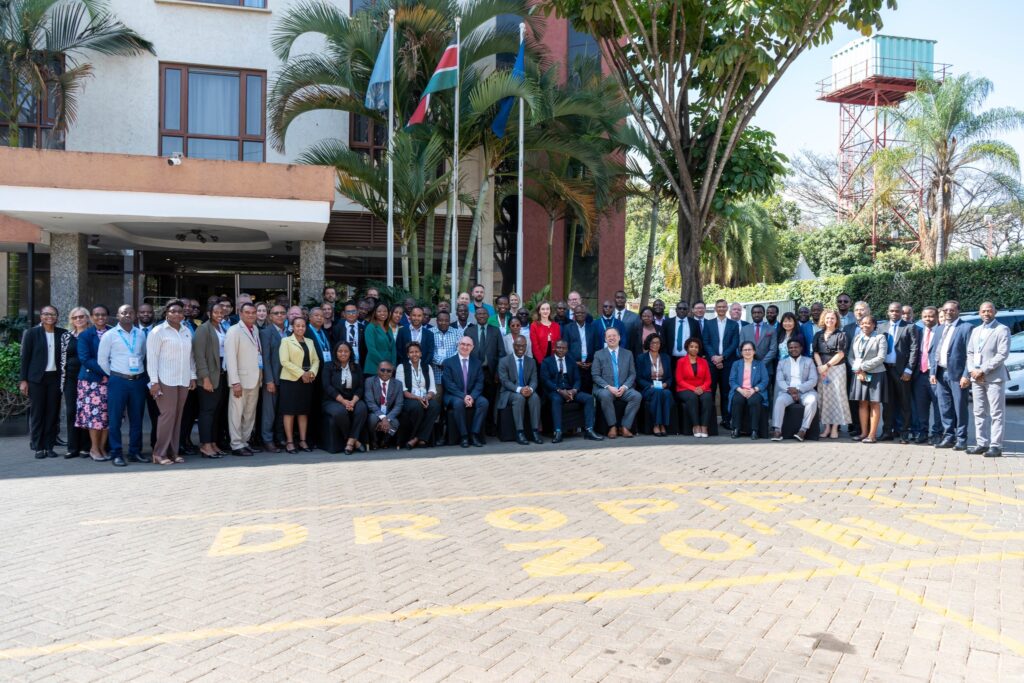
COMESA Secretariat through the ASCENT Programme has conducted a successful Carbon Days event in Nairobi, Kenya, from 10 to 12 February 2026, marking an important milestone in the region’s pursuit of accelerated sustainable and clean energy access. The gathering underscored the region’s commitment to positioning itself at the forefront of carbon market innovation while advancing national and regional climate and energy goals.
Held under the theme “Accelerating Sustainable and Clean Energy Access while Harnessing the Transformative Potential of Carbon Markets,” the event brought together Climate/Carbon, Energy and Digitalization Focal Points from the nine ASCENT countries—Burundi, Ethiopia, Tanzania, Kenya, Malawi, Rwanda, Uganda, Zambia, and Madagascar. The objective was to fast track the expansion of modern, reliable, and clean energy systems through a coordinated approach to carbon market development.
The Carbon Days Event aimed to build a shared and updated understanding of how ongoing ASCENT Energy projects can generate high quality carbon credits. Discussions focused on operational priorities, the ASCENT Carbon project approval process, and emerging opportunities for marketing and selling carbon credits, including options for transactions, required procedures, and identification of potential carbon buyers.
Speaking during the opening session, Dr. Bernard Dzawanda, Director of Infrastructure and Logistics at the COMESA Secretariat—represented by ASCENT Project Coordinator Dr. Malama Chileshe reaffirmed that the ASCENT Carbon Program is designed to unlock carbon finance to accelerate energy access. This aligns with commitments made under each country’s National Energy Compact toward achieving Mission 300.
“Carbon market development under ASCENT is not simply about financing, it is about creating a predictable and transparent framework that allows emission reductions from renewable energy and clean cooking technologies that will be recognized, monetized, and traded. This ensures that our region harnesses carbon finance as a cornerstone of sustainable energy access, while positioning Eastern and Southern Africa as a leader in global carbon market innovation,” Dr. Dzawanda said.
He emphasized that carbon market development within ASCENT is not merely a financing pathway but a mechanism for creating predictable, transparent frameworks that ensure emission reductions from renewable energy and clean cooking. He noted that carbon credits, each representing one metric ton of CO₂ reduced or removed, play a crucial role in the global climate response.
Officially opening the ASCENT Carbon Days, World Bank Regional Infrastructure Practice Director, Eric Fernstrom, urged country teams to use the platform as an opportunity to share lessons and strengthen understanding of how World Bank–supported energy access projects can generate carbon credits by accelerating implementation and deploying national digital Monitoring, Reporting and Verification (dMRV) systems linked to the regional ASCENT Carbon digital MRV platform.
“This week offers a valuable moment to consider how your country specific ASCENT projects can effectively leverage carbon finance to scale up energy access while advancing your national climate priorities,” he said.
Mr Fernstrom further explained that ASCENT Carbon was established with a clear and ambitious purpose to make carbon financing work at scale for energy access.
In his welcoming remarks, Engineer Eric Kijuru highlighted Kenya’s longstanding position as a regional leader in clean energy development, noting that over 75% of the population now has access to electricity, with more than 90% of grid power generated from renewable sources such as geothermal, wind and solar.